Quick answer
A modern home office is simple, light and built around how you actually work: one clear desk surface, a supportive chair, light from the side and storage that hides the clutter. Start with the desk and the lighting, then add warmth with wood, plants and one textured surface. The 12 ideas below show how that looks in real rooms, from a sit-stand corner to a single desk in a spare room.
Table of contents
What makes a home office look modern?
“Modern” here doesn’t mean cold. The modern home offices that work best share four things:
- Clean lines. Simple desk legs, flat fronts, no ornate trim.
- A short color palette. Two or three colors, usually a light base (white, warm gray, oak) with one darker accent.
- Natural materials. Wood, linen, wool and real plants keep a minimal room from feeling sterile.
- Hidden tech. Cables, chargers and paper live out of sight, so the desk stays clear.
1. Put a sit-stand desk in an empty corner
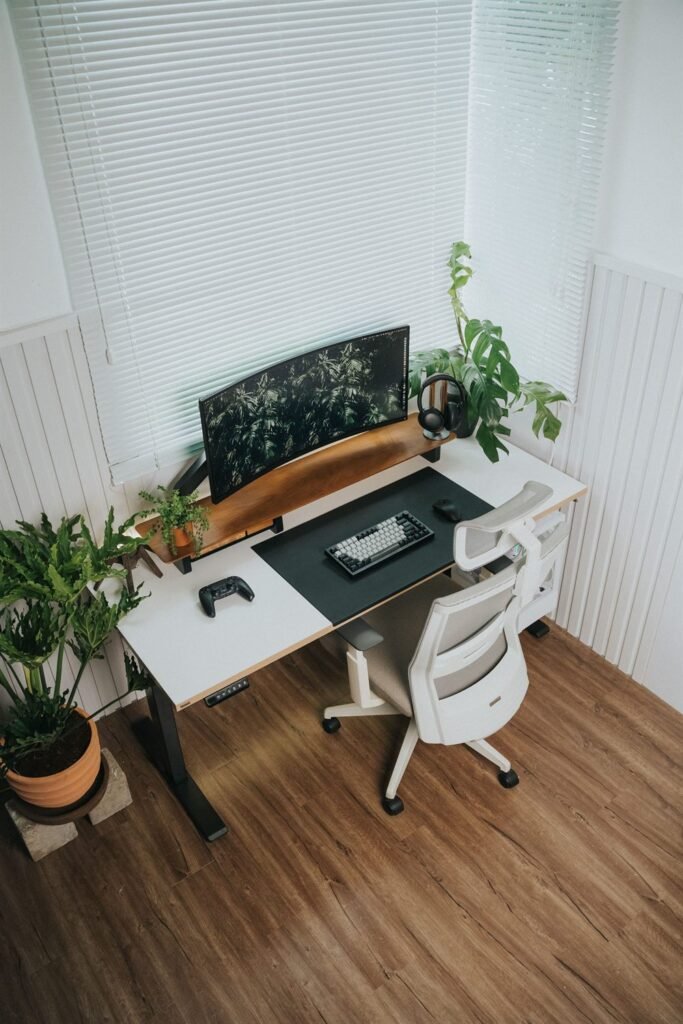
A corner uses two walls, so a full-size desk fits without taking over the room. This setup pairs an electric sit-stand desk with a wooden monitor shelf, which lifts the screen and keeps the desk surface free for the keyboard.
Changing position through the day is easier when switching takes one button press, not a separate standing desk.
Get the look: electric sit-stand desk, wooden monitor riser, large desk mat, mesh office chair, two or three floor plants.
2. Keep it white, warm and minimal
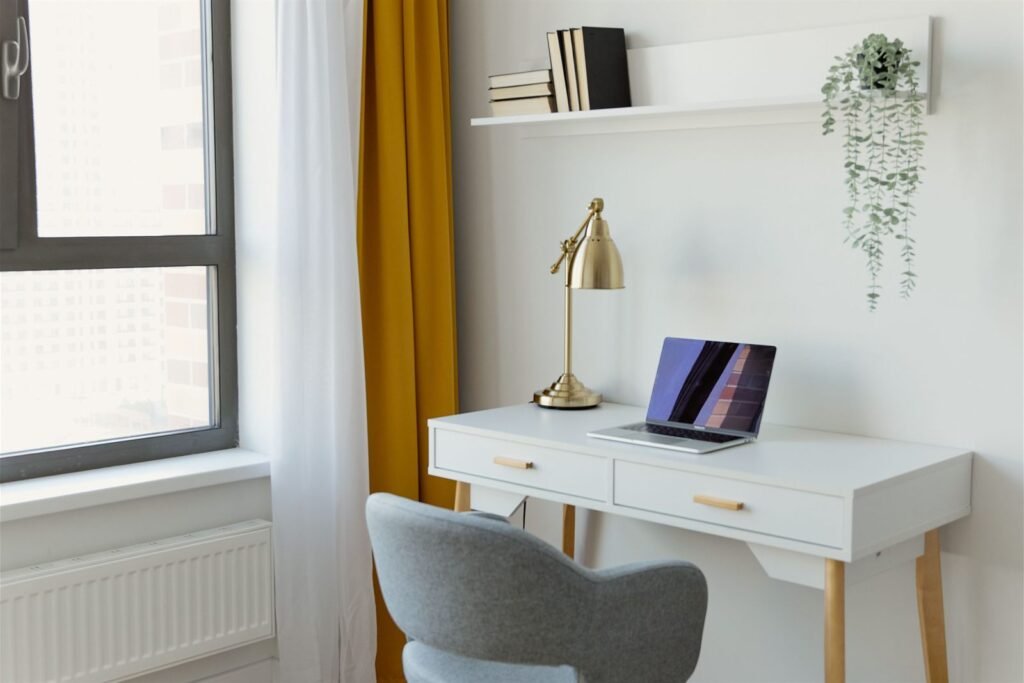
A white desk with wooden legs, one floating shelf and a brass lamp is about as simple as a home office gets. What stops it feeling empty is warmth: the mustard curtain, the oak tones and a trailing plant.
This look suits small rooms because light colors reflect daylight and make the space feel bigger.
Get the look: compact white desk with two drawers, brass task lamp, one floating shelf, upholstered chair, linen curtains in one warm color.
3. Float the monitor and use the wall for storage
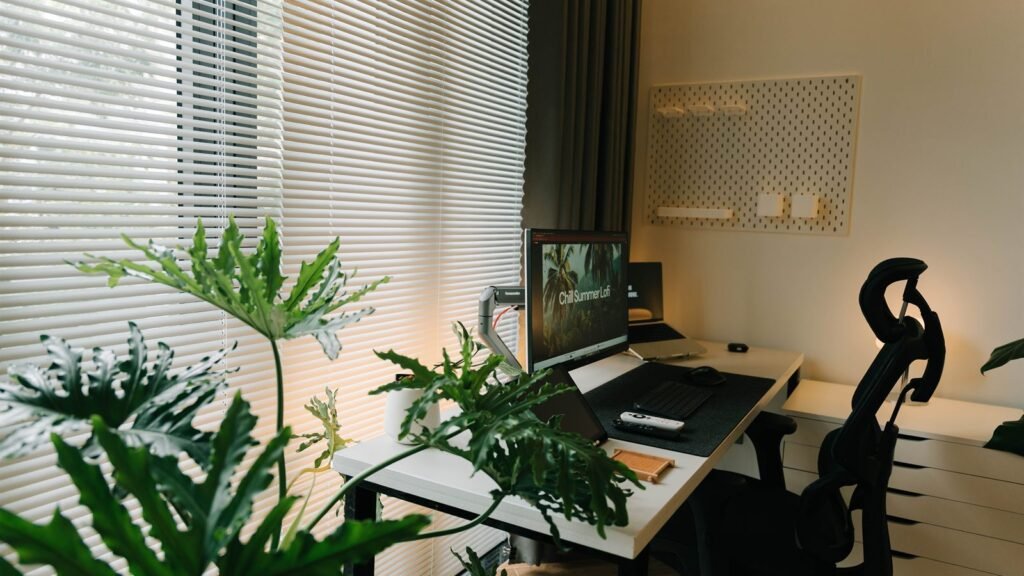
A monitor arm clears the desk and makes it easy to set the screen where your eyes need it. OSHA’s computer workstation guidance recommends placing the monitor directly in front of you, 20 to 40 inches away, with the top line of the screen at or below eye level (OSHA).
A pegboard above the desk holds small things (headphones, notes, cables) without adding furniture. The same OSHA page also suggests placing monitors perpendicular to windows to reduce glare, which is exactly how this desk sits next to the blinds.
Get the look: single monitor arm, pegboard with shelves and hooks, white drawer unit, ergonomic chair, large-leaf plants.
4. Build in shelves and layer the lighting
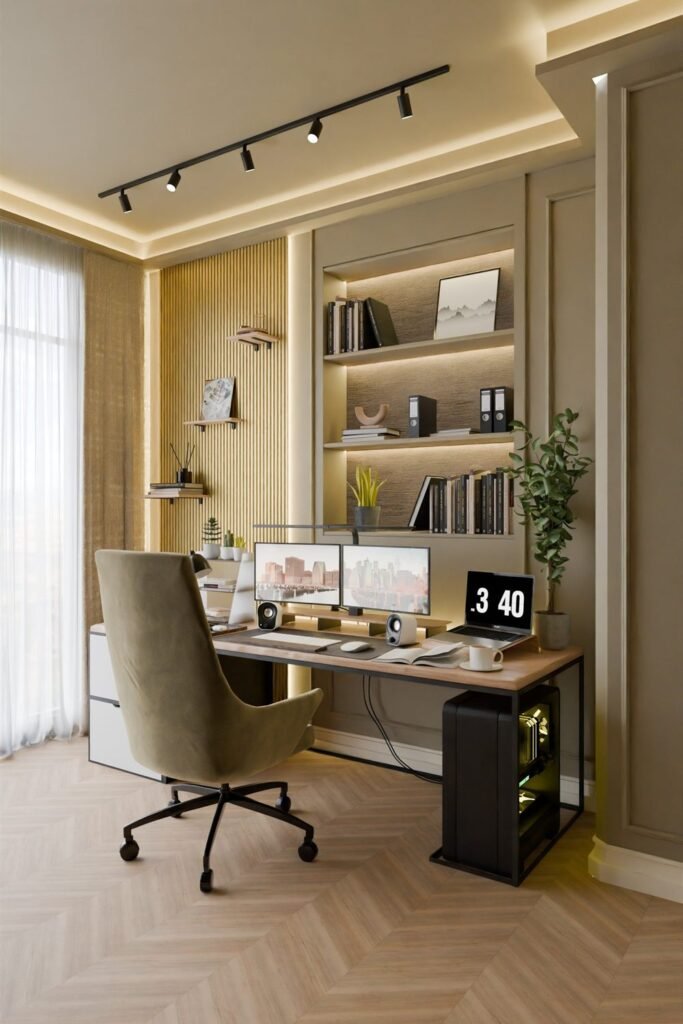
This room uses three layers of light: ceiling track lights for general light, LED strips inside the built-in shelves for a soft glow, and screens and a desk lamp for the work itself. Layered light lets you dim the room in the evening without working in the dark.
Built-in shelving also turns storage into the room’s main feature, so the desk can stay bare.
Get the look: ceiling track lights, LED strip lights for shelves, wall-to-wall shelving (or freestanding bookcases set side by side), a desk with a cable tray.
5. Let one textured wall do the decorating
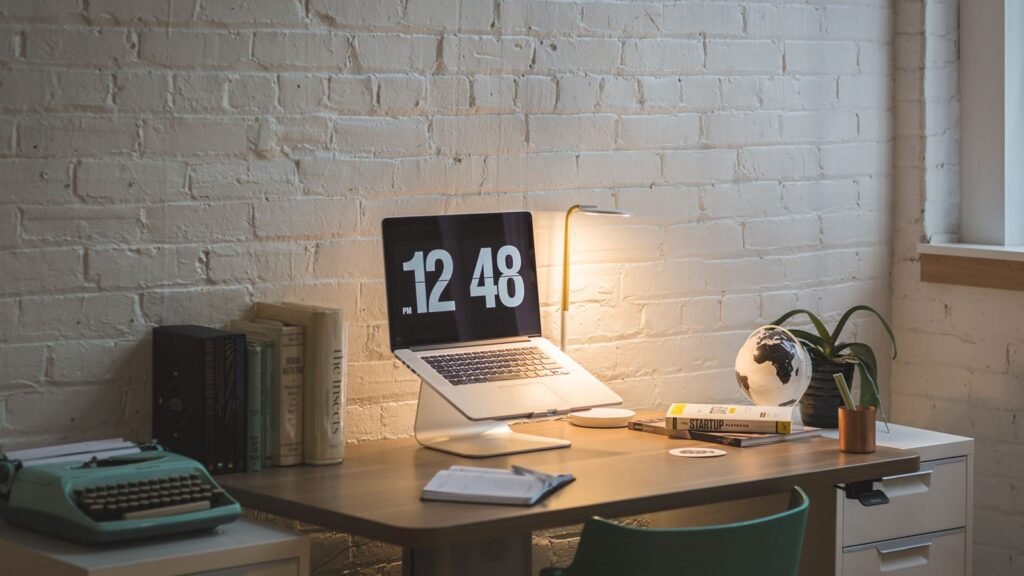
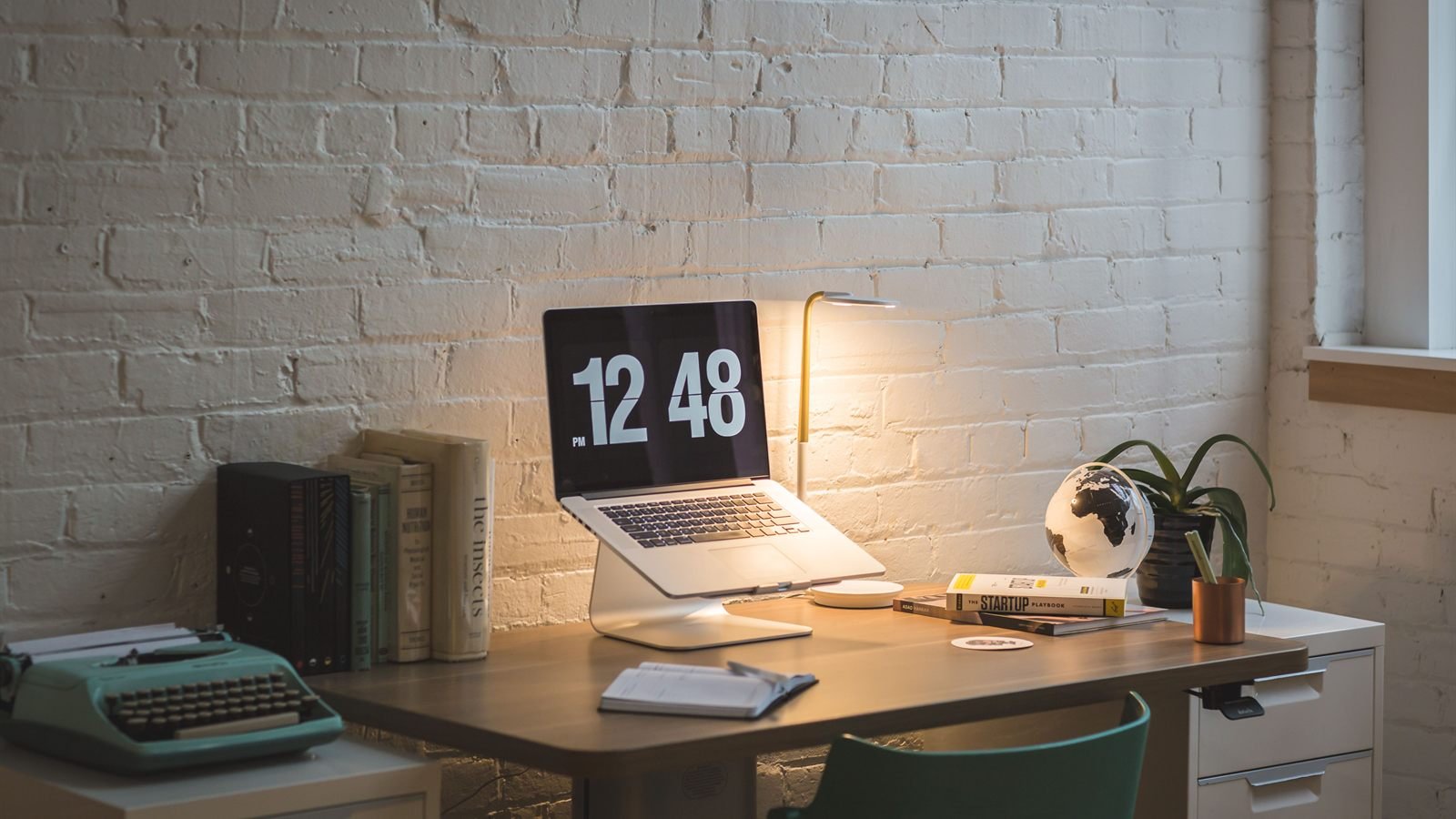
A painted brick wall gives the room character, so the rest can stay simple: a plain desk, a laptop stand, a lamp and a few books. One vintage object (here, a typewriter) adds personality without clutter.
No brick? Wood slat panels, limewash paint or a grasscloth wallpaper do the same job.
Get the look: textured wall (brick, slats or limewash), laptop stand, warm desk lamp, a small stack of hardcover books, one vintage piece.
6. Plan your lighting for evening work
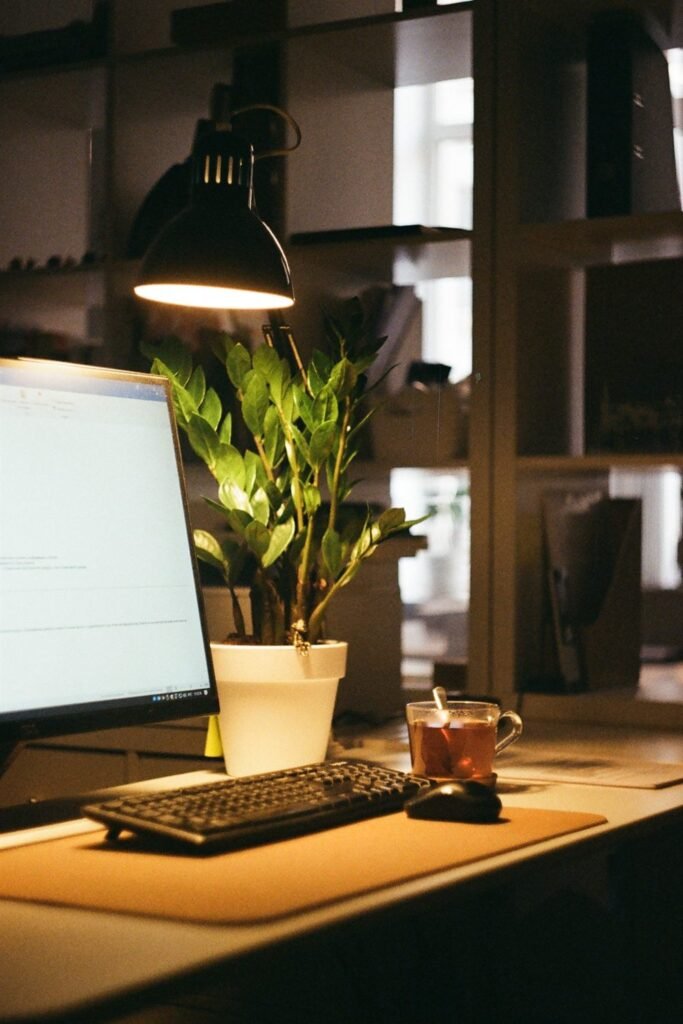
Many home offices look great at noon and terrible at 7 p.m. A warm task lamp aimed at the desk, not at the screen, keeps evening work comfortable and looks calm on camera. Avoid working in a dark room lit only by your monitor.
Get the look: adjustable desk lamp with a warm bulb, low-profile keyboard, a plant to catch the light, dark open shelving behind.
7. Go small: one simple desk and nothing else
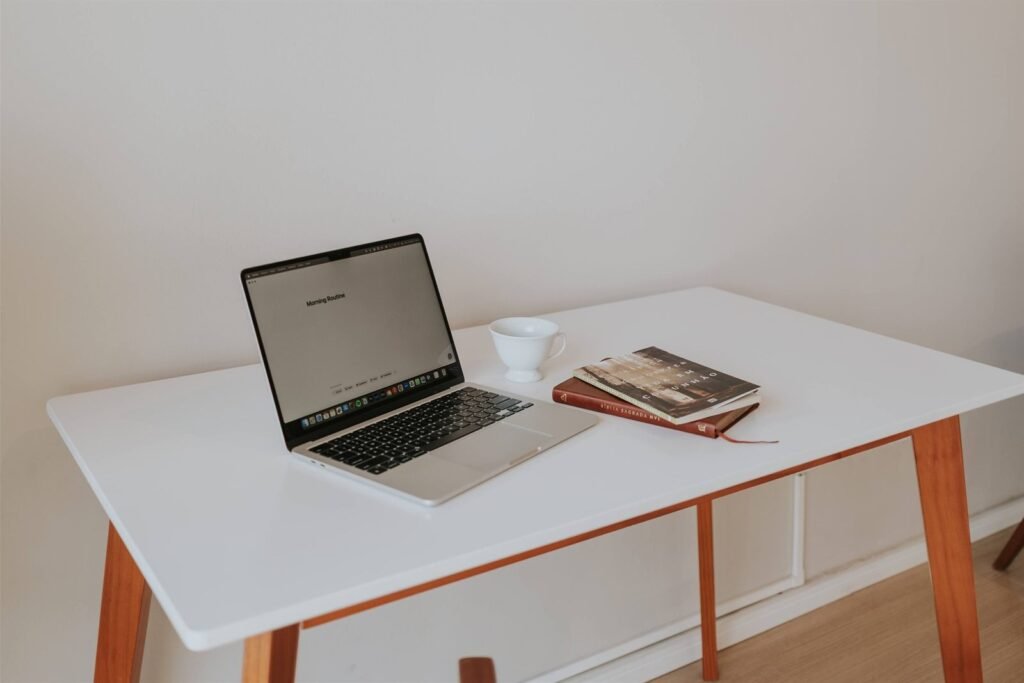
If your office is a corner of a bedroom or a guest room, a single desk with slim legs and no drawers looks lighter than a bulky workstation. Keep only what you use every day on the surface.
Get the look: compact desk with tapered wooden legs, laptop, one notebook, a mug. Everything else goes in a nearby drawer or basket.
8. Bring the outside in with plants and art
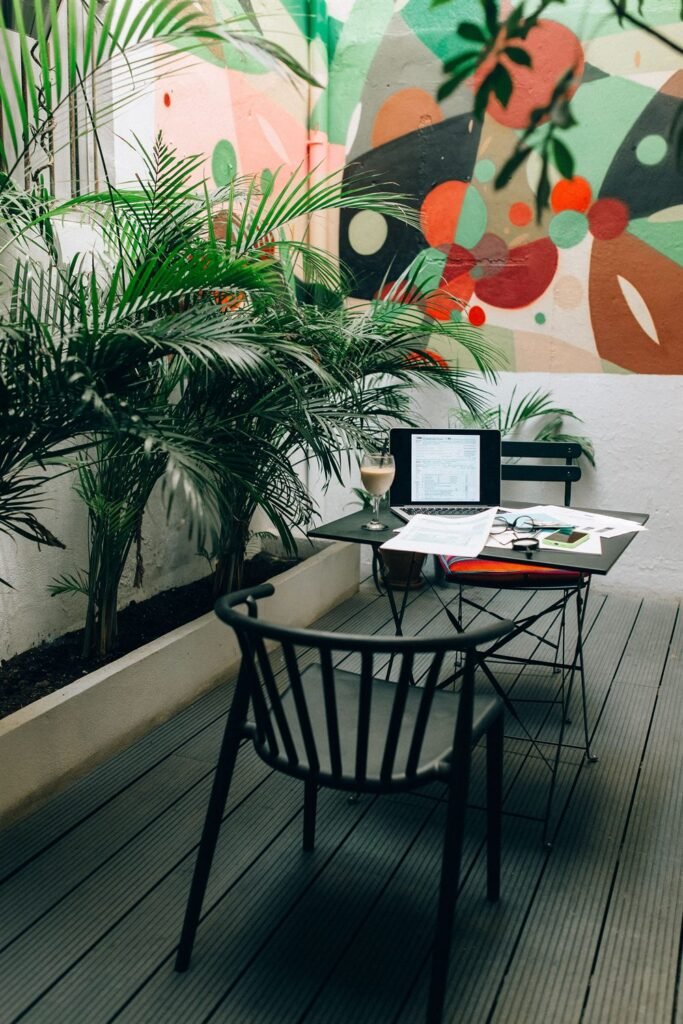
A row of tall plants and one bold mural turn an ordinary desk into a place you want to sit. Keep the furniture simple (a small table and a dark chair) so the greenery and art stay the focus.
Get the look: tall potted palms in a planter box, a large mural or wall art, a small dark table used as a desk, a slatted chair.
9. Hide every cable
Visible cables are the fastest way to make a modern office look messy. Three fixes cover most desks:
- A cable tray screwed under the back edge of the desk to hold the power strip and chargers
- Velcro ties to bundle cables running down one desk leg
- Wireless keyboard and mouse to remove the most visible wires
10. Choose a chair that looks good and supports you
The chair is the piece you use most. Look for an adjustable seat height, lumbar support and armrests that slide under the desk. Mesh chairs suit a modern, airy room; an upholstered task chair in a soft color (like the gray one in idea 2) looks warmer.
11. Stick to two or three colors
Pick a base, a wood tone and one accent, then repeat them. For example:
| Palette | Base | Wood | Accent |
|---|---|---|---|
| Warm minimal | White | Light oak | Mustard or terracotta |
| Calm green | Warm white | Walnut | Deep green |
| Soft dark | Charcoal | Walnut | Brass |
| Scandi | Pale gray | Birch | Black |
12. Soften the sound, not just the look
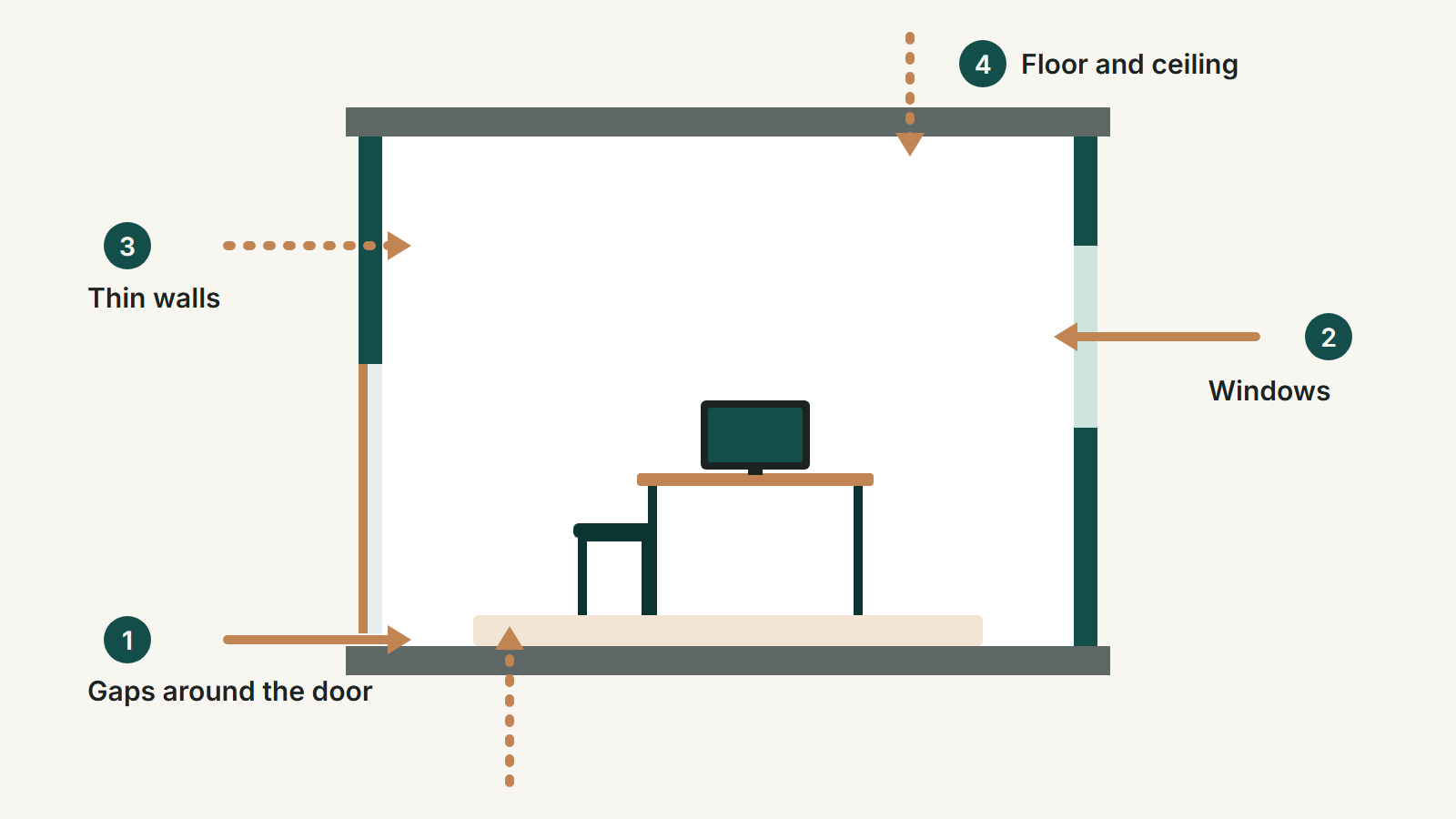
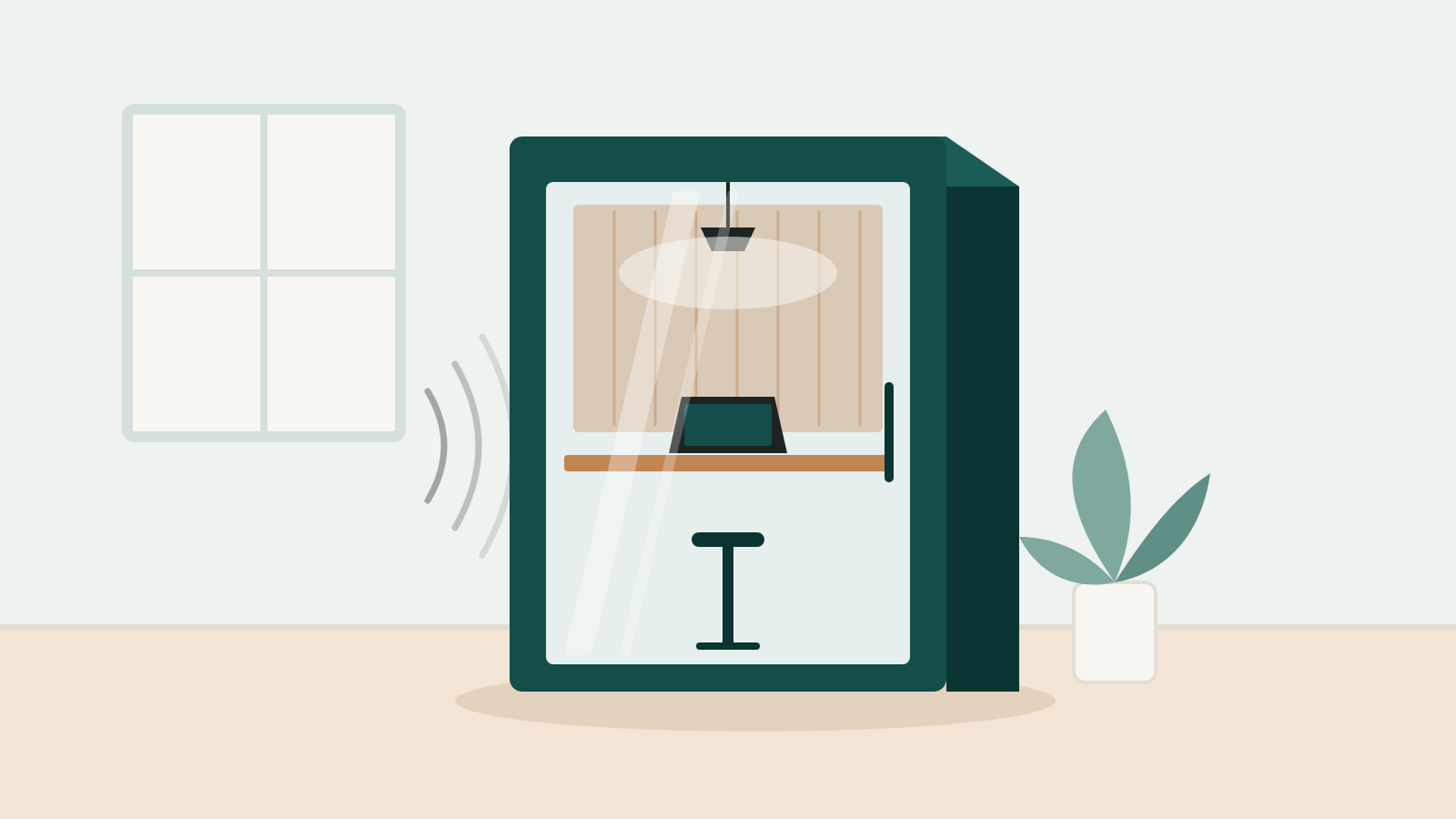
Hard, minimal rooms echo, which makes calls sound worse. A rug, curtains and an upholstered chair absorb some of that echo. If you need more, acoustic panels can double as wall decor. Note that panels reduce echo inside the room; they don’t block noise coming from outside. Our Quiet & Focus guides cover both.
How to choose your modern style
| Style | Looks like | Best for | Key pieces |
|---|---|---|---|
| Warm minimal | White, oak, one warm color | Small bright rooms | Slim desk, brass lamp, linen |
| Biophilic | Lots of plants, natural light | Rooms with good daylight | Planters, wood desk, mural |
| Industrial modern | Brick, metal, dark wood | Lofts, basements | Textured wall, metal lamp |
| Built-in luxe | Shelving wall, layered light | Dedicated office rooms | Track lights, LED shelves |
| Tech-forward | Sit-stand desk, monitor arm | Full-time remote work | Electric desk, arm, mesh chair |
Modern home office checklist
- Desk with a clear surface and hidden cable storage
- Monitor directly in front of you, 20–40 inches away, top line at or below eye level (OSHA)
- Main window to the side of the screen, not behind it
- A task lamp for evenings
- Chair with adjustable height and lumbar support
- A palette of two or three colors
- At least one soft surface (rug, curtain or panel) to cut echo
FAQ
What is a modern home office?
A workspace with clean lines, a short color palette, natural materials and hidden technology. It looks calm because only the things you use every day stay out.
How do I make a small home office look modern?
Use a slim desk with legs (not a bulky pedestal desk), light colors, one floating shelf and wall-mounted storage. Hide cables and keep the surface clear.
What colors work best for a modern home office?
A light base like white or warm gray, a wood tone, and one accent color. Repeating the same two or three colors makes even a busy room look intentional.
Where should the desk go in relation to the window?
OSHA suggests placing the monitor perpendicular to the window, so daylight comes from the side rather than from behind the screen or behind you.
How we put this guide together
The ideas are based on published ergonomic guidance (linked above) and common interior design principles, illustrated with licensed photos from Pexels. We haven’t tested the products mentioned, and no brand paid to be included. Our editorial policy →